Maximizing ROI on Creative Workflows with a DAM Connector
- cihubconnector

- Feb 17
- 4 min read
Updated: Mar 17

Creative teams today produce more content than ever before. Campaigns run across multiple channels, assets need frequent updates, and timelines continue to shrink. While organizations invest heavily in tools to manage this complexity, many still struggle to see clear returns from their creative workflows.
The issue is not a lack of systems. Most teams already use a digital asset management platform to organize brand files. The real challenge lies in how those assets are accessed during everyday work. When workflows feel slow or disconnected, productivity drops and ROI suffers quietly in the background.
This is where a DAM connector plays an important role.
Where Creative ROI Is Commonly Lost
Creative ROI is rarely lost in one large failure. It usually disappears through small inefficiencies that repeat every day.
Common problem areas include:
Designers switching between creative tools and browsers to find assets
Marketers download files multiple times to confirm the correct version
Teams are recreating content because they cannot find what already exists
Review cycles are slowing down due to uncertainty around approvals
Each interruption may take only a few minutes, but those minutes add up quickly across campaigns, teams, and months. Over time, organizations pay for delays, rework, and frustration without always realizing where the loss begins.
Why Traditional DAMs Struggle to Deliver Full ROI
Digital asset management systems are built for control, organization, and governance. They do this job well. Assets are tagged properly, permissions are defined, and approvals are tracked carefully.
The problem appears when daily work begins.
Most DAM platforms are accessed through a browser. Designers, marketers, and content teams must leave their working tools to search for assets. That extra step breaks focus and slows momentum. Under pressure, people look for faster options, even if those options create risk.
Typical workarounds include:
Saving files locally for quick reuse
Sharing assets through chat tools or email
Uploading copies into project management platforms
Once this happens, the DAM becomes a reference system instead of an active one. Governance still exists, but usage drops. When adoption drops, ROI follows closely behind.
What a DAM Connector Changes
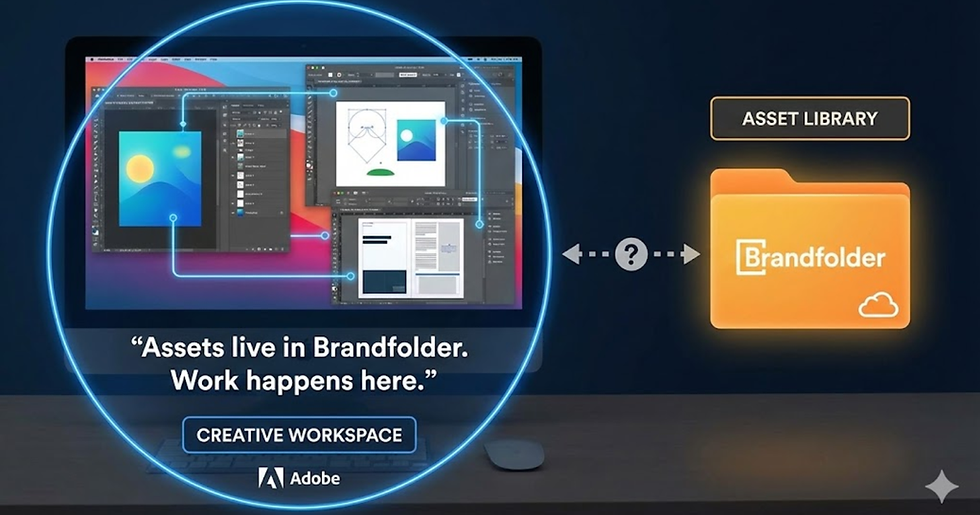
An in-app DAM connector does not replace your existing asset management system. It does not store files or create duplicates. Instead, it connects the DAM to the tools where work actually happens.
With a connector in place, approved assets become accessible directly inside daily applications such as design tools, document platforms, or project management systems. Teams can search, preview, and use assets without leaving their workspace.
This shift may seem small, but it changes behavior completely.
Instead of asking people to adapt to the DAM, the DAM adapts to how people already work.
How a DAM Connector Improves ROI in Practice
When asset access becomes part of the workflow, results start to appear quickly.
Key improvements usually include:
Faster project execution because searching no longer interrupts focus
Fewer revisions caused by outdated or incorrect assets
Stronger brand consistency across campaigns and channels
Higher adoption of the DAM across teams
Because approved assets are easier to access than workarounds, teams naturally choose the correct files. Governance improves without adding friction, which is essential for long-term ROI.
Real-World Creative Workflow Examples
Creative ROI improves most clearly when teams see changes in daily tasks.
Campaign creation becomes smoother because designers, marketers, and reviewers all pull from the same asset source. There is less confusion about which visuals belong to which campaign.
Social and content teams move faster because they can access approved brand assets directly while preparing posts. Deadlines are easier to meet without compromising brand standards.
Design reviews become more efficient because reviewers can see both work-in-progress and approved reference assets in one place. Feedback becomes clearer, and revisions become fewer.
Sales and enablement teams benefit from always using current presentations and visuals. Materials stay accurate without waiting for marketing to manually distribute files.
These improvements may not appear dramatic in isolation, but together they create measurable gains.
Measuring ROI After Integration
To understand the impact of a DAM integration, teams should look beyond surface metrics and focus on workflow behavior.
Common indicators include:
Reduced time spent searching for assets
Lower number of revision cycles per project
Increased use of approved assets
Faster turnaround times for campaigns
Many organizations also notice fewer internal support requests related to file access or version confusion. When people can find what they need easily, they stop asking for help and start working more independently.
Why Adoption Matters as Much as Technology
ROI does not come from software alone. It comes from usage.
A DAM that is perfectly organized but rarely accessed delivers limited value. A DAM that is woven into daily workflows becomes part of how work happens.
DAM connectors support this shift by removing friction instead of adding rules. They help governance work quietly in the background while teams focus on creation.
When access feels natural, adoption follows. When adoption grows, ROI becomes easier to justify and easier to maintain.
The Long-Term Value of Connected Workflows
As content volume continues to rise, disconnected workflows become harder to sustain. More assets, more contributors, and more channels increase complexity quickly.
Organizations that connect systems early build workflows that scale more smoothly. They spend less time correcting mistakes and more time producing meaningful work.
A DAM connector does not change what teams create. It changes how easily they can create it.
Conclusion
Maximizing ROI in creative workflows depends less on adding new tools and more on connecting the ones already in place. Digital asset management systems provide structure and control, but those benefits only matter when assets are easy to access during real work.
DAM connectors close the gap between governance and execution. They reduce interruptions, improve adoption, and help teams move faster without sacrificing brand consistency.
When approved assets are available exactly where work happens, creative workflows become more efficient, more reliable, and far easier to scale. That is where ROI stops leaking and starts compounding.

Comments