The Value of DAM to Protect and Scale Your Brand Equity
- cihubconnector
- Dec 2, 2025
- 4 min read
Updated: Mar 17

Your logo exists in different folders, drives, and shared links. Marketing has one version, design has another, and agencies have their own copies. The question is simple but costly: which one is correct?
This is more than a file management issue. Each time someone uses an old logo, the wrong color, or an outdated template, your brand equity takes a hit. These small mistakes weaken how customers see your brand.
Brand equity grows when every touchpoint looks and feels aligned. When assets don’t match, perception drops. This is why businesses are now turning to Digital Asset Management (DAM) systems and workflow connectors to protect and scale the value their brand carries.
What Is Brand Equity?
Brand equity is the value your brand adds to your product or service beyond its basic function. It’s the reason people choose your brand over a cheaper alternative or pay more for the same product with your label on it.
Key components of brand equity include:
Brand awareness and recognition
Perceived quality and reputation
Brand personality and associations
Customer loyalty and preference
Emotional connection
Brand equity builds gradually through consistent experiences. Every interaction either reinforces or weakens perception. When branding is consistent, customers form a clear image of who you are. When it’s inconsistent, they question your reliability.
Even global consumers are willing to try a new brand because of a lower price, which shows how fragile loyalty can be. A strong brand reduces that risk by building familiarity and trust over time.
Common Threats That Damage Brand Equity
Brand equity doesn’t vanish overnight, but it weakens when teams don’t actively protect it. Some common issues include:
1. Outdated logos and visual elements
You update your brand, but older versions keep reappearing. Your website shows one logo, but presentations use another. Each mismatch makes your brand appear unorganized.
2. Scattered folders and missing files
Assets live across drives, emails, PDFs, and personal devices. Team members recreate files because they can’t find the originals. This leads to variations that slowly change how your brand looks.
3. No version clarity or approval tracking
Nobody knows which assets are final or approved. Someone uses a draft image meant only for internal use. Another team uses a design that hasn’t been reviewed by legal. These mistakes weaken trust.
4. Time spent searching instead of creating
When teams spend more time looking for files than producing content, asset management becomes a barrier rather than a support system.
These issues don’t just delay work; they erode how customers view your brand.
How DAM Protects Brand Equity
Digital asset management systems are built to solve exactly these challenges and protect the value your brand carries.
One Source of Truth
All approved logos, templates, images, brand guidelines, and videos live in one system. This removes confusion and keeps teams aligned, no more searching across drives or emails.
Version Tracking and Control
Every file update is saved as a new version, while older ones remain archived. The current version is clearly marked, and usage rights are defined to prevent misuse.
Governance and Access Levels
Not everyone needs full access. DAM systems allow view-only permissions, upload restrictions, and approval workflows to ensure that only the right people can make edits.
Brand Guidelines Stored with Assets
Instead of living in forgotten PDFs, your guidelines stay right next to your files. When someone downloads the logo, they also see how to use it.
Natural Consistency Across Teams
When approved assets are easy to access, people use them. Consistency becomes a habit, not a task.
DAM shifts the mindset from searching for files to working with assets strategically.
The Missing Piece: Access Within Workflows
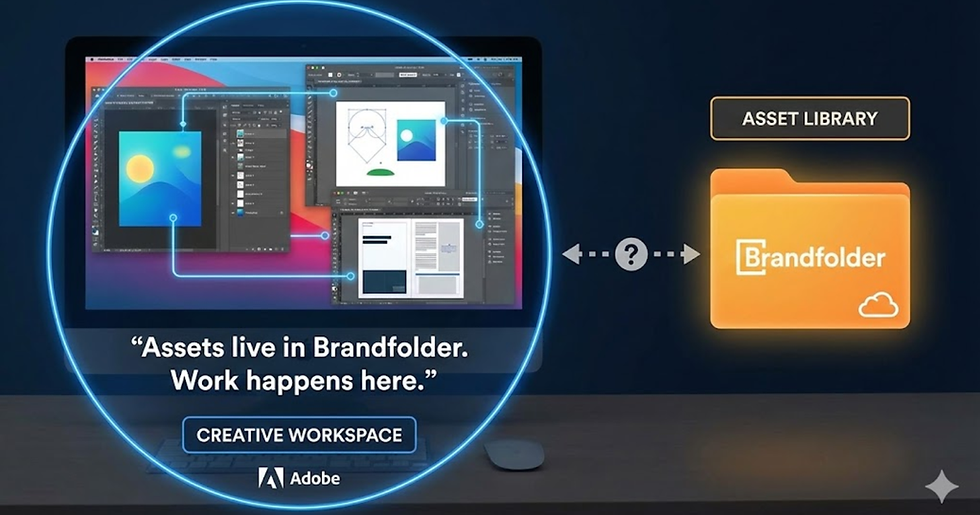
DAM builds a foundation, but users still need easy access while working. Designers use Adobe Creative Cloud, marketers write in Google Docs and sales teams prepare slides in PowerPoint. Switching platforms to search for assets causes friction. Over time, people start storing their own versions and consistency breaks down.
This is where workflow connectors make the difference. They bring DAM assets directly into the tools teams already use. No switching apps. No downloading files. No breaking creative flow.
What This Means in Practice
Designers find brand assets right inside Adobe Illustrator
Marketers access approved templates within Google Workspace
Sales teams add correct product images straight into PowerPoint
Teams work faster because everything they need is already there
When the right assets are built into daily workflows, consistency happens naturally. Teams don’t need reminders, they simply work with what’s already approved.
How DAM & Connectors Scale Brand Equity
As businesses grow, maintaining consistency becomes harder. More content, more campaigns, more teams, more tools. Without structure, confusion grows and brand equity weakens.
The combination of DAM integrations solves this by blending central control with seamless access.
Why This Scales Effectively
Works for distributed teams and agencies
Keeps templates uniform across regions
Supports large product catalogs
Enables faster campaign execution
Avoids duplication and unnecessary rework
Brand equity doesn’t just stay protected; it becomes scalable. Whether content is made in New York, London, or Melbourne, every customer sees the same brand identity.
Conclusion
Brand equity takes years to build but can weaken quickly when files are scattered, and branding is inconsistent. Today, customers expect clarity and consistency, and they judge brands faster than ever.
DAM systems protect brand equity by storing brand assets in one place, tracking versions, and linking guidelines with real work. Workflow connectors make this system practical, bringing approved assets directly into daily tools. Teams stay on-brand without extra effort.
This combination turns brand consistency into a growth strategy, not a challenge. When finding assets takes seconds instead of minutes, teams focus on creativity, not searching. And when brand identity stays consistent across every channel, customer trust grows naturally.

Comments